
3 Art and Craft Activities to Do at Home
A long holiday at home turns into screen time fast. Here are three craft projects to do together, with materials, steps and suitable ages.
Giving children the chance to build creativity and artistic skill matters. Artistic ability is genuinely useful through life, and it's what turns a child into someone creative with a strong imagination.
There's plenty you can do together to sharpen it. Alongside bringing you closer, art builds motor skills through imagining something and then making it.
Art and craft is one of the easiest to do at home, covering anything creative made by hand, painting, drawing, or building something out of paper. This article runs through projects you can do together.
What Art and Craft Does for a Child
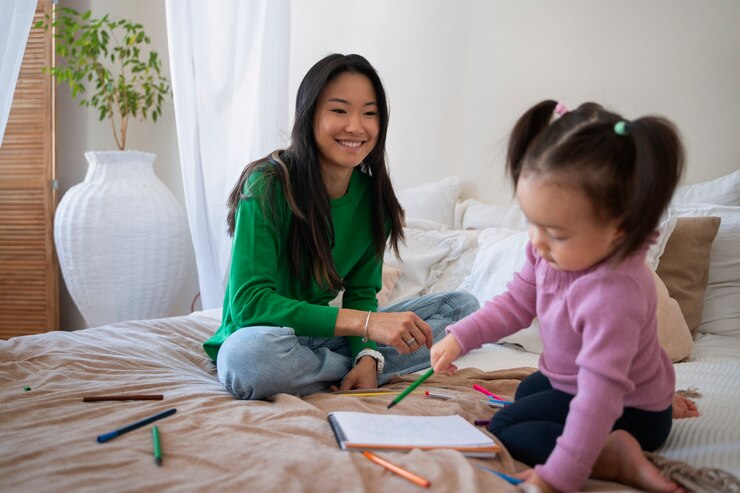
Art and craft does a great deal for a child, beyond giving creativity somewhere to go. It supports fine motor development and cognitive ability at the same time.
Children build better hand-eye coordination through it, along with problem-solving and critical thinking. Group projects strengthen social skills too, and the whole thing gives a child an enjoyable, productive way to express what they feel and think.
Giving a child access to different materials and techniques isn't only about exploring and learning. It creates the kind of moments that strengthen the relationship between you, which is why it works so well at a weekend or over a school holiday.
3 Art and Craft Projects for Home
A weekend or an end-of-term break leaves a lot of hours to fill. With that much free time, children get bored of the same things quickly and drift back to a screen.
These three are worth having ready. They keep a child occupied and give you time together, which is the better half of the deal.
1. Making a Calendar From Card
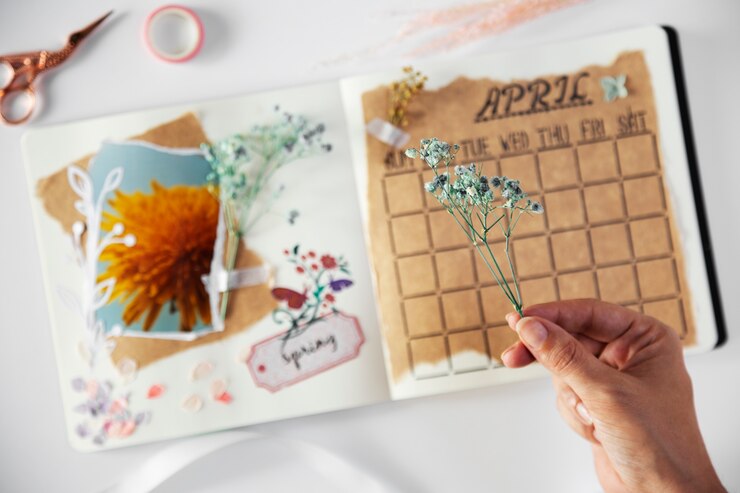
Time at home together can be genuinely warm, and a card calendar is a good place to start. Alongside the creativity, it teaches a child to organise time in a way that doesn't feel like a lesson.
What you make ends up on the wall as something that actually gets used, marking the dates that matter. It's also a proper collaboration, where you both contribute ideas.
The materials are simple, card, coloured pencils, markers, a ruler, glue and some stickers. Start by deciding the size, then draw the frame for the date boxes.
From there your child can write the dates in and add the month at the top. Decorating is the part they'll enjoy most, and it's where they get free rein with colour.
This suits children from about five, once they know their numbers and can work alongside you. It's entertaining and it teaches time and responsibility, though keep an eye on them so it stays safe.
2. Making Paper Flowers
Paper flowers are another good one to do at home. Alongside creativity, folding and cutting paper develops fine motor skills.
What you end up with works as decoration or as a present with some thought behind it. The folding and cutting is where the time together actually happens, and where you share ideas about how it should look.
The materials are simple and mostly already at home, coloured paper, scissors, wooden sticks and glue. Start by folding the paper into petals and leaves.
Attach the leaves to a stem made from a wooden stick, then arrange the petals into a flower. Decorating is the enjoyable part, adding detail to the petals or colour to the leaves, and it's worth discussing the colours together as you go.
This suits children from about six, once they handle scissors confidently and can follow instructions. It teaches precision and patience, and it's worth supervising the scissors throughout.
3. Painting
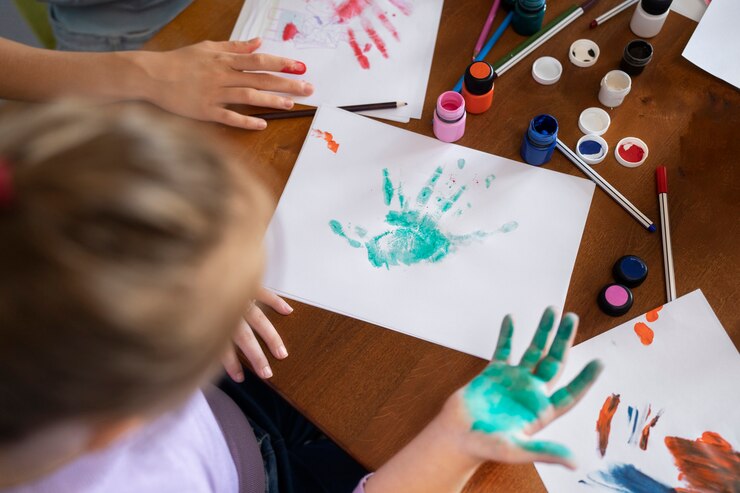
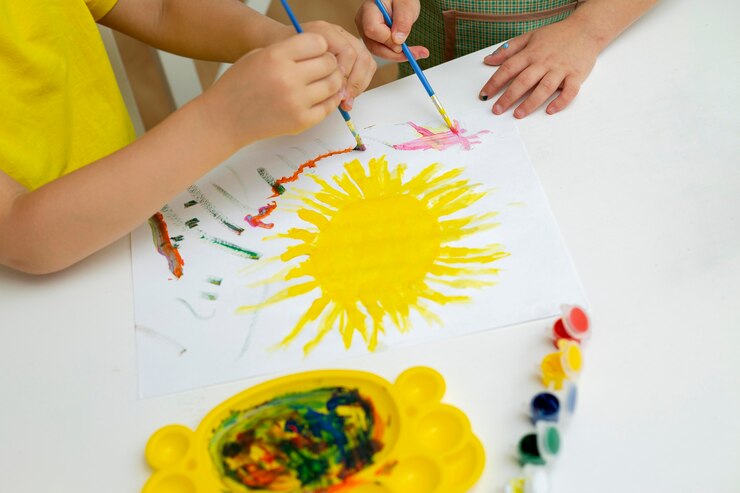
Painting on canvas is an enjoyable and educational option for home. It builds the relationship between you and brings real benefits with it.
Children get more creative through painting, because they're free to experiment with colour and form. It also improves fine motor skills through using a brush and trying different techniques. The materials are straightforward and available in most bookshops, canvas, acrylics or watercolours, brushes in a few sizes, a palette for mixing and water for cleaning up.
For children from about three this works as a sensory activity too, since they'll reach for the watercolours with a brush or their hands. Keep watching so the paint stays out of their mouth.
It will make a mess of the house. It's still worth it, because a child learns not to fear getting dirty and picks up colours early, and the skill develops as they get older.
Beyond the creativity, painting builds concentration and the habit of finishing something. It's an effective way for a child to express themselves and work through what they're feeling.
Doing it together supports their creative development and opens up communication between you. Both are worth the mess.
When they've finished, put the work up on the wall. It reads as recognition, and it stays a memory long after they've grown.
In Short
Art and craft is one of the better ways to build a child's interest in art. That interest brings a good deal with it as they grow, since a child with an artistic streak thinks creatively and imagines freely.
If you're looking for a creative way to spend time at home, try art and craft. Painting on canvas in particular is an enjoyable way to build the relationship over a weekend or a school holiday. For more ideas, have a look at the Happy Kamper blog, where you'll find indoor and outdoor activities alike.