

Stimulating a Child's Senses Through Simple Sensory Play
Rich sensory experience builds the brain faster. Simple games that work each of the five senses.
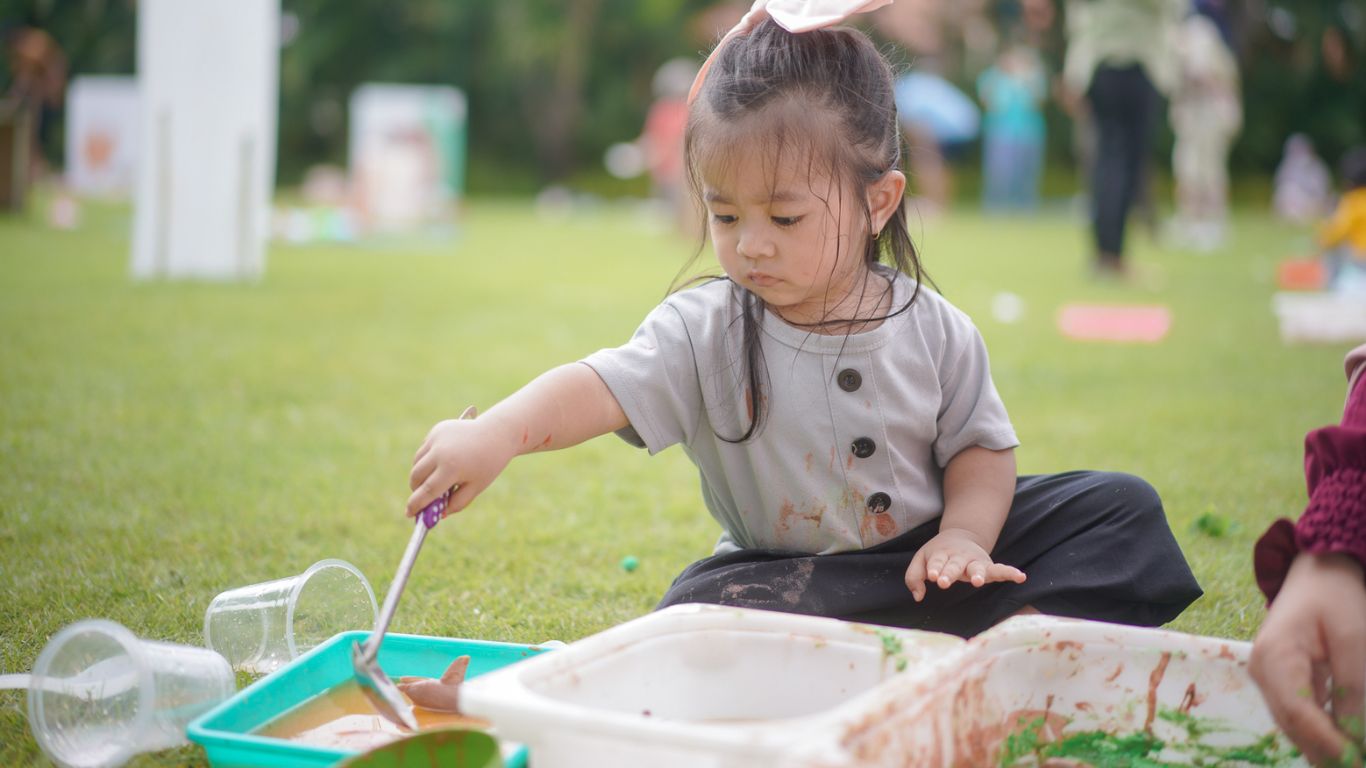
Sensory stimulation matters a great deal to how a child develops. From birth, a child learns about the world through their senses, seeing, hearing, touching, smelling and tasting. Given the right stimulation, each of those senses supports how their brain develops.
Research published by the Harvard University Center on the Developing Child indicates that rich sensory experience in childhood accelerates neural connections and supports a child's thinking later on. The question is how to develop those senses enjoyably, and the answer is sensory play.
You don't need expensive equipment or complicated preparation, since plenty of simple games work at home. Here are ways to stimulate a child's senses through play that's easy and effective.
What Sensory Play Does for a Child
1. Fine and Gross Motor Skills
During sensory play, squeezing dough or picking up small objects with their fingers, a child trains the fine motor control that matters for writing and drawing. Jumping on a trampoline or walking across different textures develops gross motor skills instead. Sensory play is enjoyable and supports coordination and balance at once. Playing with different textures also sharpens their sense of touch, making it easier for them to recognise objects around them.
2. Thinking Skills
Sensory play stimulates a child's brain in a distinctive way. Playing with kinetic sand or matching shapes, they learn to think logically and solve a problem. It helps them grasp basic concepts like cause and effect and pattern, both of which matter for their schoolwork later. Sensory training early on is also linked to stronger memory and concentration.
3. Social and Emotional Skills
Sensory play often involves interacting with a friend or a parent. Playing with water together or sharing toys with different textures teaches a child about sharing, empathy and cooperation. They also learn to recognise and manage their own feelings through play that produces a particular sensation, like squeezing a stress ball when they're anxious. Early sensory stimulation helps a child develop stronger social skills.
4. Language and Communication
While a child plays with different materials, you can talk to them about what they're feeling, whether the texture is rough or smooth. That's how they learn to connect words to real experience. Children who are talked to during play develop language faster. Sensory stimulation through play also introduces new concepts in a way they find easy to follow.
5. Concentration and Focus
Some children are easily distracted, and sensory play helps them learn to focus for longer. Pouring water between containers or making a pattern with coloured blocks improves their ability to concentrate on a particular task. Working the senses through play like this is genuinely useful once they start school and need more focus than before.
Working Each of the Five Senses
1. Touch
To develop a child's sense of touch, get them playing with objects of different texture. Fill a sensory box with sand, rice or various fabrics and ask them to guess what they're holding without looking. Sensory stimulation this way makes them more sensitive to texture and sharpens their perception. A wooden puzzle or playing with slime works well for this too.
2. Sight
Training a child's sight works through matching colours and shapes. Play with colour cards, or send them hunting for objects around the house by colour. You can also play shadow guessing with a torch and your hands. Visual stimulation helps a child recognise the world more clearly and improves their hand-eye coordination.
3. Hearing
Playing with sound is an enjoyable way to train a child's hearing. Play an instrument or record everyday sounds around the house and ask them to guess what each one is. Playing with songs and rhythm also helps them recognise differences in pitch and pattern. Sensory play involving music strengthens their hearing along with their speech.
4. Smell
To train their sense of smell, play a guessing game with scents. Put various things in sealed containers, whether that's coffee, cinnamon or scented soap, and ask them to identify each one. Cooking together and introducing different spices is another enjoyable way to work a child's senses through everyday play.
5. Taste
Exploring taste works through tasting food blindfolded and guessing what it is. Prepare something sweet, sour, salty and bitter, and ask them to identify each one.
It's enjoyable, and it helps them recognise and accept a wider range of food. Early sensory stimulation like this is also useful for reducing fussy eating.
With simple, enjoyable sensory play you can give a child the stimulation they need. Alongside the entertainment, it supports their physical, cognitive, social and emotional development.
Sensory Games to Try at Home
Sensory play doesn't have to be complicated. Plenty of simple activities work at home with materials you already have. Alongside being enjoyable, they help stimulate a child's senses properly, and here are some worth trying.
Coloured Rice
Rice dyed with food colouring makes a good material to play with. A child can scoop, pour or stir it to train their hand-eye coordination. They also learn to recognise colours and feel a distinctive texture while doing it.
A Sensory Box
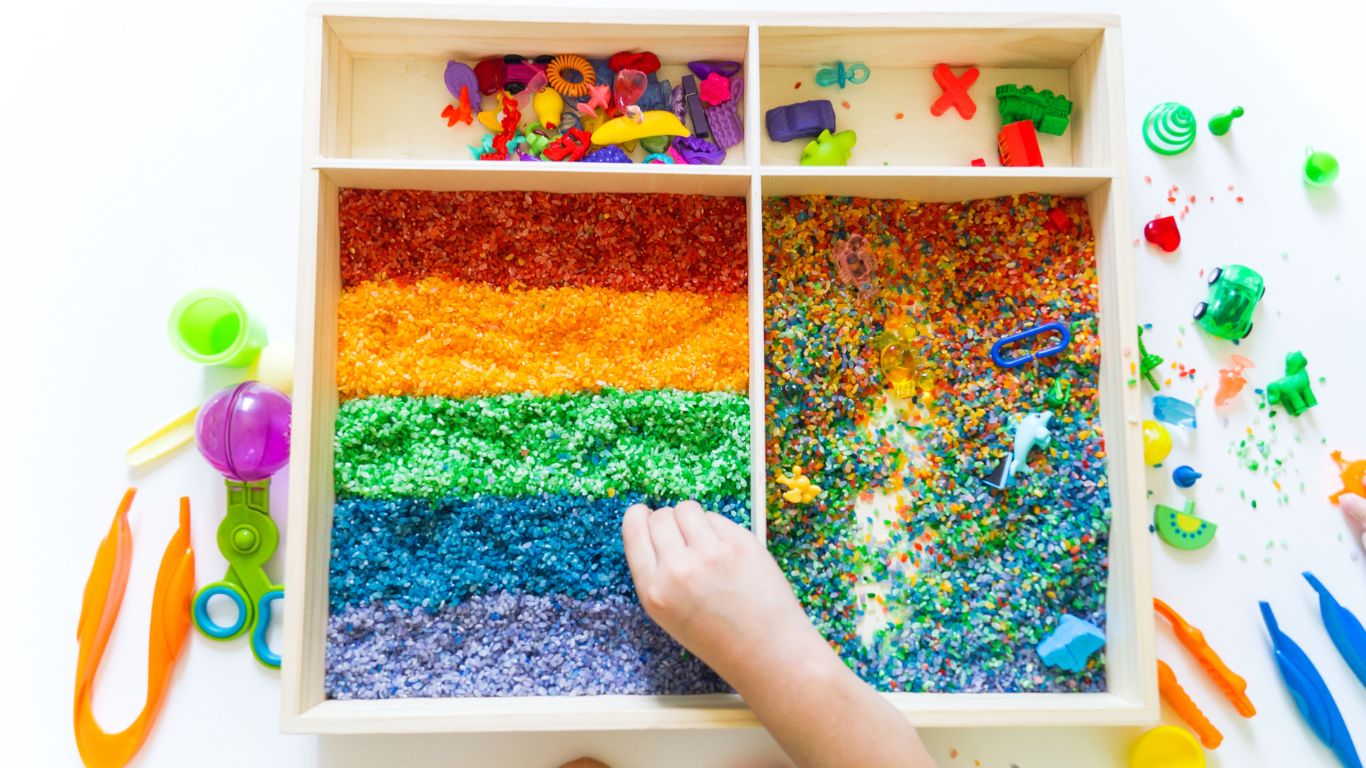
Fill a box with objects of different texture, whether that's cotton wool, kinetic sand, buttons or small stones. Let your child touch each one and guess the texture, which develops their sense of touch.
Guessing the Scent
Prepare a few small containers holding something with a distinct smell, like coffee, cinnamon or pandan leaf. Cover your child's eyes and ask them to identify each one. This strengthens their sense of smell and their memory alongside.
Finger Painting
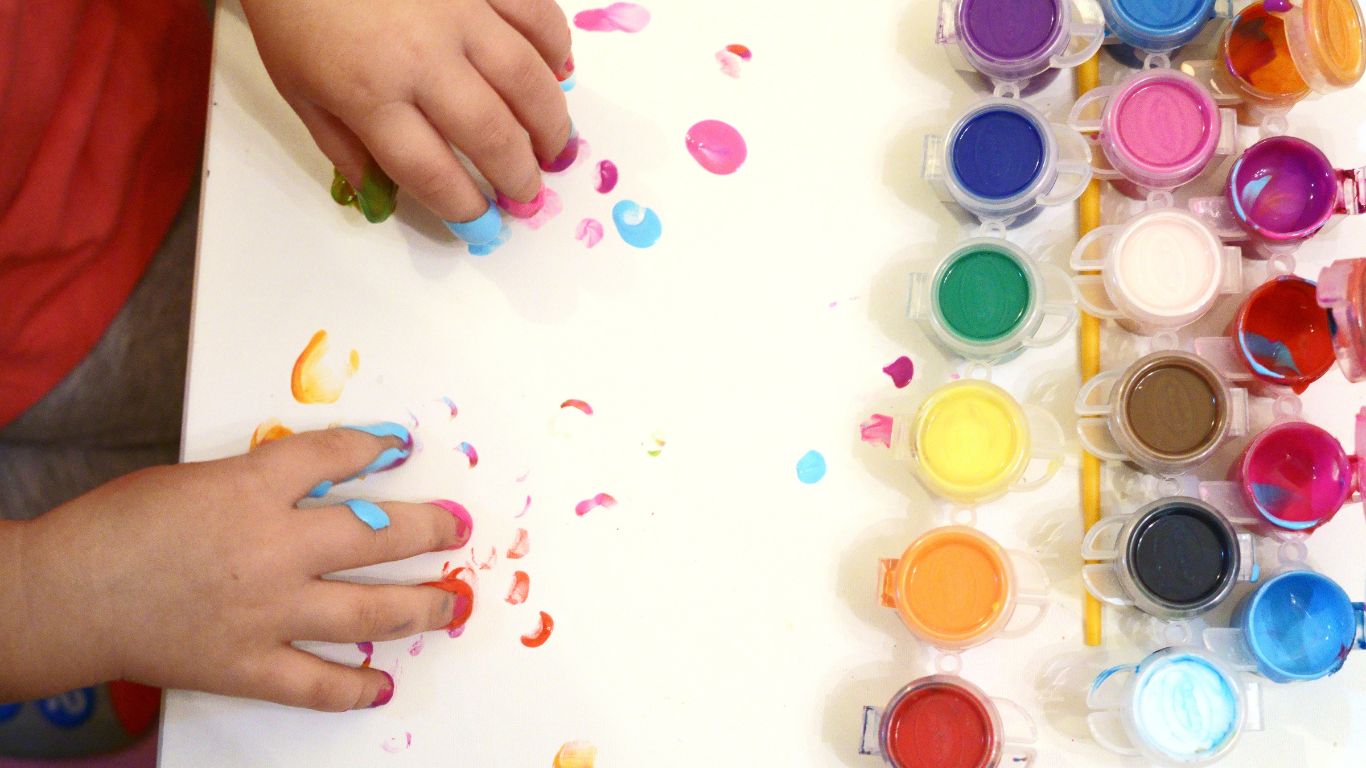
Let your child paint with their fingers. Alongside stimulating their creativity, it helps them feel different liquid textures and watch colours mixing.
Making a Shaker
Use an empty bottle filled with rice or beans to make a simple instrument. A child can shake it and hear what comes out, which trains their hearing. Through simple games like these, a child can develop their senses naturally while enjoying themselves.
Tips for Parents
To get the most out of sensory stimulation, there are a few things worth keeping in mind.
Match the Game to Their Age
A one-year-old has different sensory needs from a five-year-old. Choose games matched to their stage of development so the benefit is greater.
Make Sure the Materials Are Safe
Always check that whatever you use for sensory play is harmless and free of anything toxic. Water-based paint, for instance, is safe on skin and if it reaches their mouth.
Do It Consistently
Sensory stimulation works better done regularly. It doesn't have to be daily, but a few times a week gets a child used to meeting new sensations.
Bring Other Children Into It
Sensory play alongside friends or family raises the benefit further. Children learn to share, imitate and communicate better while they're at it. With these in mind, sensory play becomes an activity that's enjoyable and genuinely effective at stimulating a child's senses.
Time to Get Started
Through sensory play you can help your child develop their senses enjoyably and without much setup at home. For something more interactive, there are sensory play pop-up classes listed in the Happy Kamper app. Here are some worth looking at.
Sensory Play Providers on Happy Kamper
- Sensory Park (Surabaya)
Sensory Park is an educational play space built specifically around sensory stimulation. Children can explore a range of textures, sounds and colours through interactive play. Check current schedules in the Happy Kamper app.
- Highfive Cooking Club (Bekasi)
An interactive cooking class that sharpens kitchen skills while stimulating taste, smell and touch. Children learn to recognise a range of ingredients in a way they enjoy. Listed in the Happy Kamper app.
- Keedo Learning Centre (Jakarta)
Keedo Learning Centre has offered exploration-based sensory activities. Children play with kinetic sand, watercolour and other materials to work their creativity and their senses. Find the classes on Happy Kamper.
- Playful Pals Playhouse (Jakarta)
Playful Pals offers a distinctive play experience built around sensory games. From colour experiments to texture exploration, each activity is designed to support sensory development. All accessible through the Happy Kamper app.
- Sensorialoca (Jakarta)
Sensorialoca runs Montessori-based sensory play, teaching children to recognise texture, shape and colour through a method they enjoy. Check the classes directly on Happy Kamper.
- Teman Khals (Jakarta)
With an exploration-led approach, Teman Khals offers a range of sensory play suited to children. Its classes are built to support sensory development and are listed in the Happy Kamper app.
It's worth starting with sensory play at home and building from there. Confirm current schedules and prices with each provider before booking.