

How to Help a Child Develop Their Potential
Working out what a child is genuinely drawn to comes before choosing anything. Here are four ways to find it, and five kinds of activity that build on it.
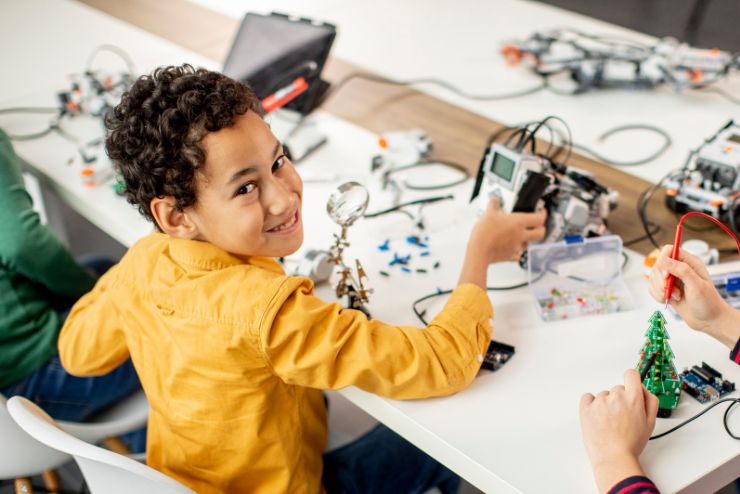
The world children are growing into is competitive, and adapting to it starts early. A parent's part in that is providing a rounded education and the right activities to build on what a child already has.
Getting the most out of a child's potential is how you help them prepare for what comes next. Every parent wants to see their child become the best version of themselves, and that starts with noticing what's there early. So what can a parent actually do to find and build on it?
How to Find a Child's Potential
1. Work Out What They're Drawn To
Start by watching what your child does day to day and noticing what holds them. Which activity do they enjoy and stay with for long stretches?
That's usually the clearest signal of a genuine interest. It's worth more than asking them directly.
2. Look at Their Hobbies
Look at the hobbies they return to on their own. An aptitude test with a professional is worth considering too, if you want something more definite.
3. Don't Dismiss Any of It
Parents sometimes assume they know best and push a child towards something without meaning to. It's easy to decide a favourite activity isn't useful enough or isn't helping them develop.
All of it is part of the process, though. Don't dismiss anything your child is drawn to, because that may be exactly where a genuine love of something starts and where a future talent comes from.
4. Support It Properly
Lastly, back it with real support and the right facilities. The most useful of those is a programme or activity that fits what your child is actually working on.
Five Kinds of Activity Worth Considering
Enrichment programmes and good activities are a practical way to build on what's already there. They support cognitive and social development, introduce a child to new interests, and build skills that carry back into their academic work. Here are five worth considering.
1. Educational Activities
The first is anything educational, which works as support for what a child is doing at school. Extra enrichment helps them grow and find where their strengths are.
There are plenty of options. It's worth discussing with your child, and with their teacher or tutor, which academic areas would benefit most. Here are three examples.
Programming and Robotics
These are thought to improve a child's mathematical ability. Critical thinking, problem-solving and creativity all get worked at the same time.
Language Courses
A language course helps a child adapt to other cultures. If you're planning on schooling abroad at some point, it becomes close to essential.
Tutoring
For general academic ability, tutoring is a reliable option. A child gets enrichment and extra material on the subjects they need, which usually shows up in how they perform at school.
Which of those does your child actually need? That's the question worth answering before booking anything.
2. Art Classes
The next is art. For a child with a leaning towards it, enrolling them somewhere is a genuine mark of respect for that interest. They'll also meet other children with the same interest, which tends to raise their enthusiasm and lets the ability develop further than it would alone.
Here are some worth looking at.
Music and Singing
A child who likes playing an instrument or singing is well suited to music and vocal lessons. Working with a professional teacher is what takes the ability as far as it can go.
Dance and Theatre
A child who likes dancing, traditional or modern, can take dance lessons and meet others who want the same thing. Dance classes often run alongside theatre, which gives a child room to explore acting and performance as well.
Art and Craft
Art and craft has become a popular class in its own right. Children learn contemporary forms in it, motion art, painting and slime-making among them.
Drawing and Painting
If your child loves drawing and painting, a class is the obvious way to develop it. Learning alongside a working artist sharpens both the skill and the instinct behind it.
3. Sport
Sport is the next one worth considering. Beyond physical health, it builds a child's confidence and their social skills. Here are a few options.
Swimming
For a child who likes being in water, swimming lessons are the obvious choice. Swimming brings a good deal with it, supporting balanced growth while working the muscles and motor skills.
Training with a professional coach covers a child's daily physical activity. It tends to show in their sleep and their appetite too.
Taekwondo
Taekwondo also builds on a child's potential, and suits anyone drawn to martial arts. The values it teaches, courage, respect and togetherness, carry into how they behave day to day.
Futsal
For a child who likes futsal, a club or a professional coach is the way to develop it. They'll work from the basics up to the advanced game, which channels the hobby and leaves the door open to playing seriously later. There's plenty besides, basketball, tennis, football and others, and the right one depends on what your child actually wants.
4. Outdoor Activities
Children can also be brought into outdoor activities that build on their potential. There's no shortage of outdoor play available now. Here are some examples.
- Outbound courses
- Wall climbing
- Archery
- Flying fox
- Animal feeding, and others
Some outdoor activities cost money and some are free. Both are worth exploring.
5. Social and Environmental Activities
Social and environmental work builds on a child's potential too. Some children grow up with a strong sense of empathy, and this kind of activity validates it while supporting their emotional development.
Environmental work does something similar, teaching a child about sustainability and about caring for the natural world. Volunteering, gardening and work placements are the usual examples.
Those are five worth considering to help a child develop what they have. Keep involving them in choosing, because that's what makes the difference to how much they get out of it.
The next step is finding a provider you can reach and afford. Happy Kamper lists activities alongside their providers and their prices.
What Happy Kamper Does
Here's what the app offers for finding children's activities.
- Search by location, activity category, price and the child's age.
- Prices shown up front. Each listing carries its price, so you can compare before committing.
- Booking and payment. Book and pay directly in the app.
- Fast track. Book tickets for play centres and activities in advance rather than queueing on arrival.
How to Find an Activity
Here are the three steps to finding an activity in the app.
- Download the app
It's on Play Store and the App Store. Register an account and fill in the details it asks for.
- Search for an activity
Once you're in, the home screen carries categories including education, play centres, childcare, sport, art and outdoor spaces. You can search by distance, price, your child's age, activity and category.
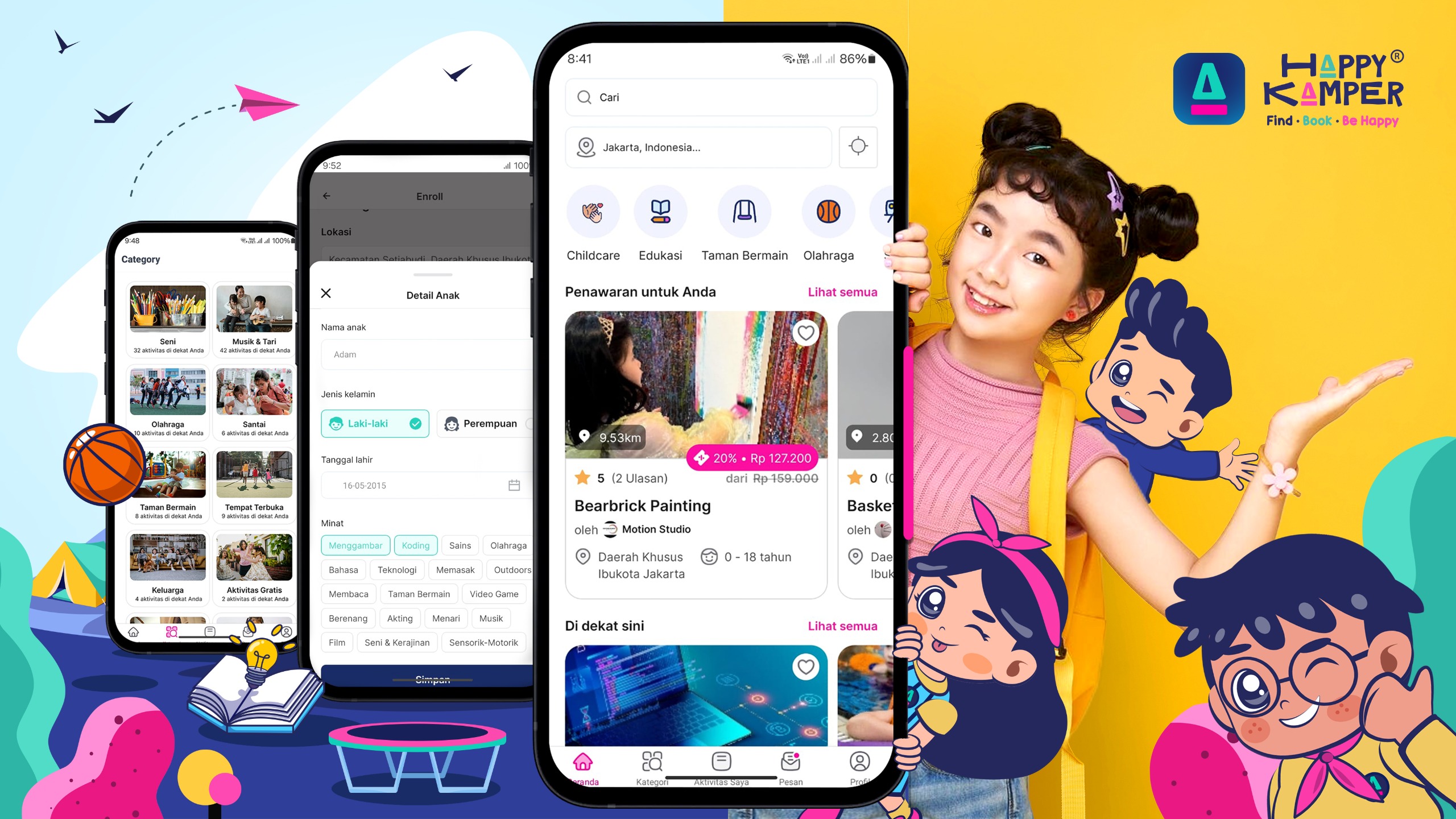
With a location set, you can type a keyword straight into the search box, "programming" for instance. That returns every provider offering programming classes. Click through to a class and you'll see the provider and the price.
- Register and pay
Once you've settled on a class, go through to registration, fill in the details and complete payment.
That's It
Want to look at more? Have a browse and see what's available for building on what your child is already good at.