
Nine Tips for Teaching a Child to Swim Safely
Teaching a child to swim yourself builds the basics and the relationship. Nine tips for doing it safely.
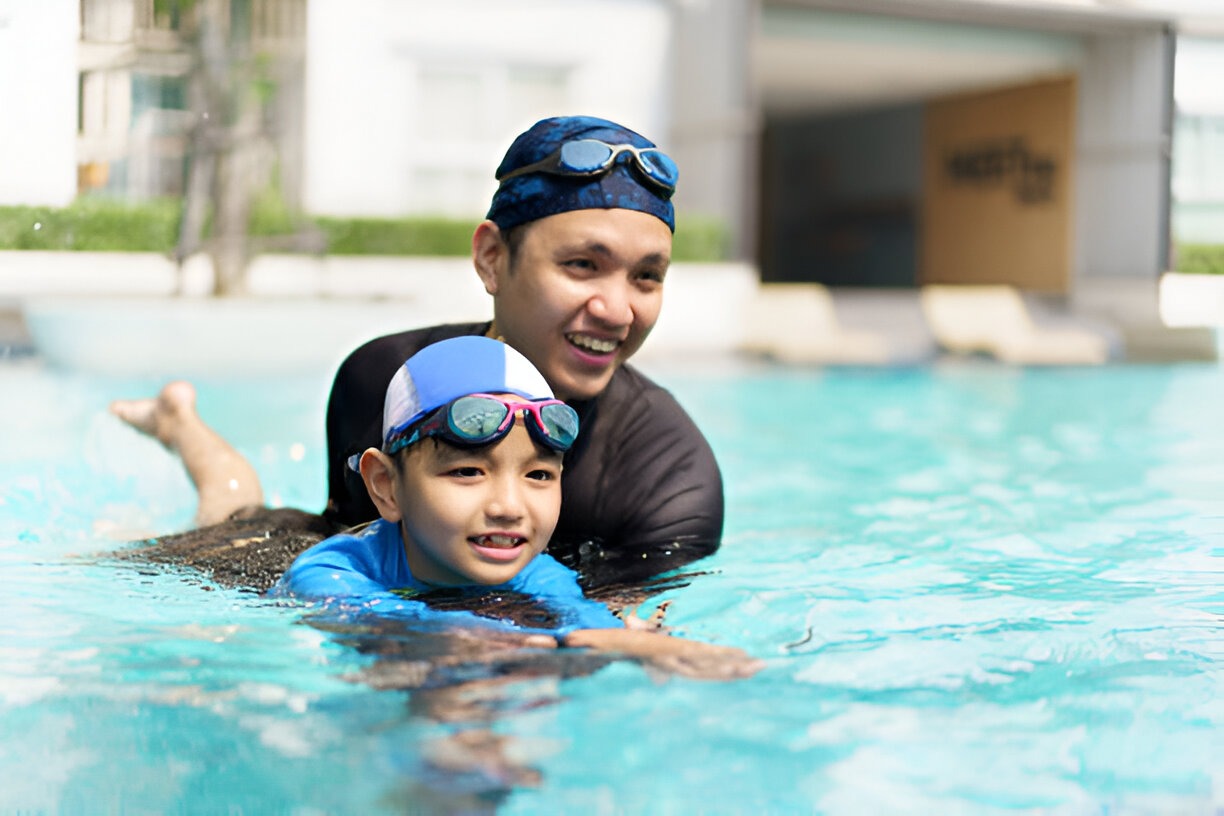
Swimming is worth teaching a child early so they get the most from it. You can take a real part in that yourself, which builds the relationship alongside the skill. Teaching your child to swim also puts you there through the learning, which matters more than it sounds.
When a parent is involved, a child develops their swimming considerably more easily. Once the basics are in place, a swimming class can take them further.
The other thing that matters is knowing how to teach it safely. That is what keeps a child free of injury while they practise.
Here are nine tips for teaching a child to swim safely and comfortably.
1. Use Proper Swimwear and Equipment
The first thing to instil is always using proper swimwear and equipment. Make sure your child understands that safety comes first in any activity, swimming included.
Getting them used to the kit also teaches them that swimming is a sport that takes preparation. Then when they want to swim somewhere on a day out, they know to bring what they need.
2. Introduce Them to Water First
Start by getting your child used to water. Swimming is a water sport, so they need to be comfortable in it, and pouring water slowly over their shoulders and head is a reasonable way to begin.
A child who isn't used to it may be startled at first, but they settle. Bath time is a good place to build that familiarity.
3. Choose the Right Time of Day
Pick the best time for your child to swim. The Indonesian Paediatric Society recommends morning and late afternoon, with water temperature around 20 degrees. Those windows are safest, since they avoid a sudden drop in body temperature.
It's worth explaining this to your child too, so they understand why morning or late afternoon is the sensible time to swim anywhere.
4. Make Them Comfortable First
Get the conditions comfortable before anything else, so the experience doesn't leave a child wary of water. Early on it's fine if they only wade, and bubbles or another water game make it more enjoyable.
Comfort is the key to teaching anything, swimming included. Set it up right at the start and a child will happily learn alongside you.
5. Practise Breath Control
Next a child can start learning to control their breathing. The first practice can happen at bath time, when you pour water over their head.
Once they're comfortable and confident enough, move it into the pool. Breath control is one of the foundations of swimming at all.
With their breathing under control, a child can explore the pool far more freely.
6. Work on Their Kick
After that you can start teaching them to kick. A strong kick matters a great deal in swimming, so it's worth training properly.
It doesn't have to start in the pool. Kicking a ball works as a starting point, then move the practice into shallow water.
7. Practise Floating
Floating is a skill a child needs while learning to swim. Teaching it means instilling calm and a bit of nerve, since most children are initially afraid of sinking or taking in water.
Once they're confident enough to float, you can introduce a simple stroke so they can move around the pool.
8. Teach the Right Technique
Teaching correct technique matters a great deal. In some cases that calls for a professional instructor to guide a child properly.
Enrolling them in swimming lessons is one route. At a swimming class a child gets something considerably more comprehensive than practising alone.
9. Practise Getting Out
Once a child is confident in the pool and exploring freely, teach them how to get out of it. Getting out is a skill in its own right.
They'll need help at first, but work towards them managing it independently. Nerve is the deciding factor here rather than strength.
A reward when they clear each stage is worth using. It keeps a child enthusiastic about the next one.
Those are nine tips for teaching a child to swim safely. Repeat them until a child has the confidence and the basic skills in place.
If they're ready to go further with a coach, a swimming class is the obvious next step. Happy Kamper lists swimming classes with locations and current prices shown.
Booking a Class
The Swim Starter is one of the swimming providers listed on Happy Kamper, and it has run classes for children from roughly 4 to 16. A trial class is worth taking first to check your child is comfortable there. More detail on their Instagram, @theswimstarter.id.
Location
Address: Meeting Point Plaza Festival, Jl. H. R. Rasuna Said No.22 Kav. C, Karet Kuningan, Kecamatan Setiabudi, Kota Jakarta Selatan, DKI Jakarta 12940. Confirm current opening hours and fees before travelling.