

9 Sensory Play Ideas You Can Set Up at Home
Sensory play works all seven senses and needs almost nothing you don't already own. Here are nine ideas, and what each one builds.
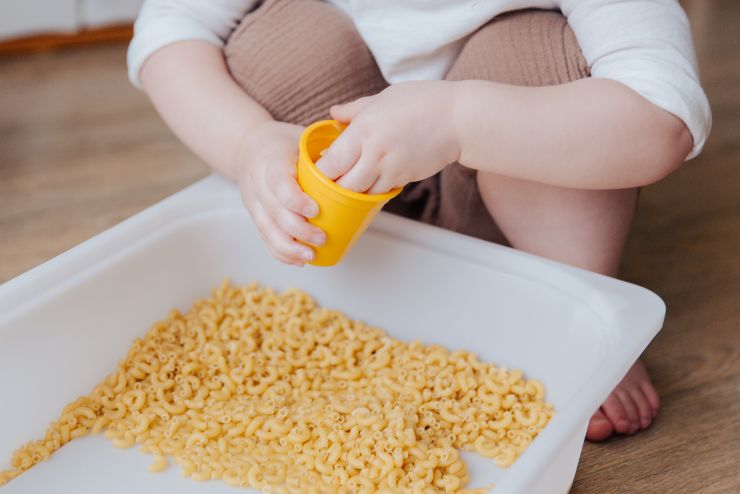
There are plenty of ways to support how a one-year-old develops, and sensory play is among the most useful. Before the ideas, though, it's worth knowing what sensory play actually is and what it does.
What Is Sensory Play?
Sensory play is play designed to exercise a child's senses. It works across all seven, touch, taste, sight, hearing, smell, balance and movement.
It brings a good deal with it for how a child develops. Here's what a child gets out of it.
What Sensory Play Does
1. Builds Curiosity
Sensory play has a child exploring new shapes, textures, smells and tastes. All that novelty is thought to sharpen curiosity considerably. Once that curiosity is satisfied, a child works out what they like and dislike, and what's safe as opposed to what to stay away from.
2. Develops Motor Skills
Sensory play develops both gross and fine motor skills. Walking barefoot, jumping, running and rolling all work the gross motor side.
Playing with a spoon, playdough, drawing and colouring work the fine motor side. Both improve with the practice.
3. Sharpens Thinking
Play that draws on several senses at once is thought to speed up the connections being made in the brain. That supports a child's thinking well before school starts. It's a strong argument for starting sensory play early rather than waiting.
4. Calms Them
Sensory play helps a child set aside frustration, anger and discomfort for a while. For a hyperactive child it can improve how well they focus.
The calm comes from trying something new that engages the senses. That's usually enough to reset the mood.
5. Builds Language
Sensory play does a great deal for language. To introduce hot and cold, for instance, you can use warm water and cold water rather than explaining it.
Soft and hard work the same way, through objects with those textures. Each word becomes much easier for a child to grasp when it's attached to something they've felt.
9 Sensory Play Ideas for Home
1. Playdough
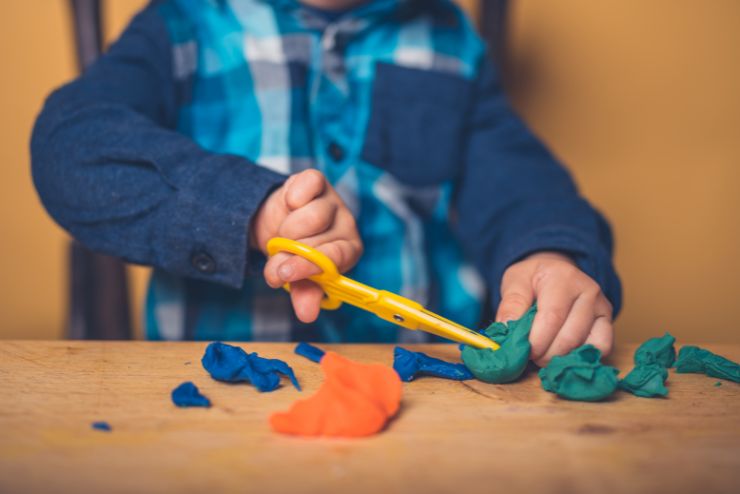
Playdough builds creativity, and it exercises touch as a child holds and shapes it into whatever they're imagining. You don't have to buy it either, you can make playdough at home from flour, cornstarch and safe colouring.
2. A Sensory Bin
A sensory bin is easy to put together at home from things you can find. Take a reasonably large plastic container and fill it with items of varying texture, sand, torn paper and anything else that's safe for a child to handle.
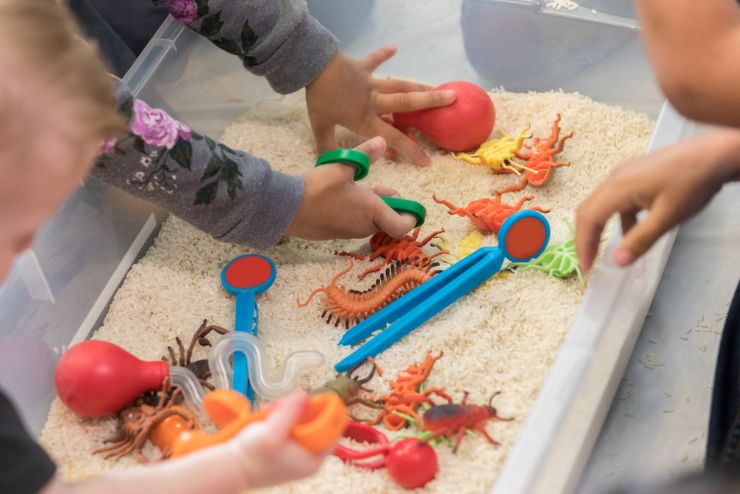
A sensory bin is a good way to introduce a child to a range of textures at once. Keep them supervised throughout.
3. Handprints
Handprints work well for sensory development. Take a container, fill it with water mixed with food colouring, then let your child press their hand in and print it onto paper.
Bright, varied colours make it more interesting. The mess is part of the point.
4. Maracas
Maracas can be made from what's already in the kitchen. Put mung beans, rice or sand into an empty bottle and seal it tightly so it's safe. Each filling makes a different sound, so a child hears the rhythm and the difference between them.
5. Moving Balls With a Spoon
Next is moving small balls with a spoon. Use a sturdy plastic or melamine spoon so it stays safe. This one builds concentration and focus, and it develops a child's movement gradually as they go.
6. Gardening in the Yard
Gardening outside is excellent for sensory development. Let your child play with soil and whatever pots you've set out.
Keep an eye on cleanliness once they've finished. That part is non-negotiable.
7. A Sensory Board
A sensory board made from a simple piece of board introduces a child to different shapes and textures. Use wood or plastic, then attach things like fabric, a keyring, cotton wool and sponge. The point is giving their sense of touch plenty to work with.
8. Playing With Ice
Ice is worth trying too. Let your child feel the cold, and introduce it gradually so the temperature doesn't startle them the first time.
You can vary it by having them throw the ice or break it up. Both add another texture to the experience.
9. Coloured Water
Lastly, introduce colours using glasses of water. Set out several glasses and a few food colourings, then have your child drop each colour into the water.
Watching the colour change tends to delight them. It's also a good moment to start naming colours.
None of these are complicated, and the materials are mostly already in the house. That makes them easy to set up when you need something to do together.
All that's left is finding an afternoon for it. There are more activity ideas listed on Happy Kamper, each with its price and location.


