

Why STEM Learning Matters in the Early Years
Ten things STEM learning builds in a child, and four practical ways to support it at home.
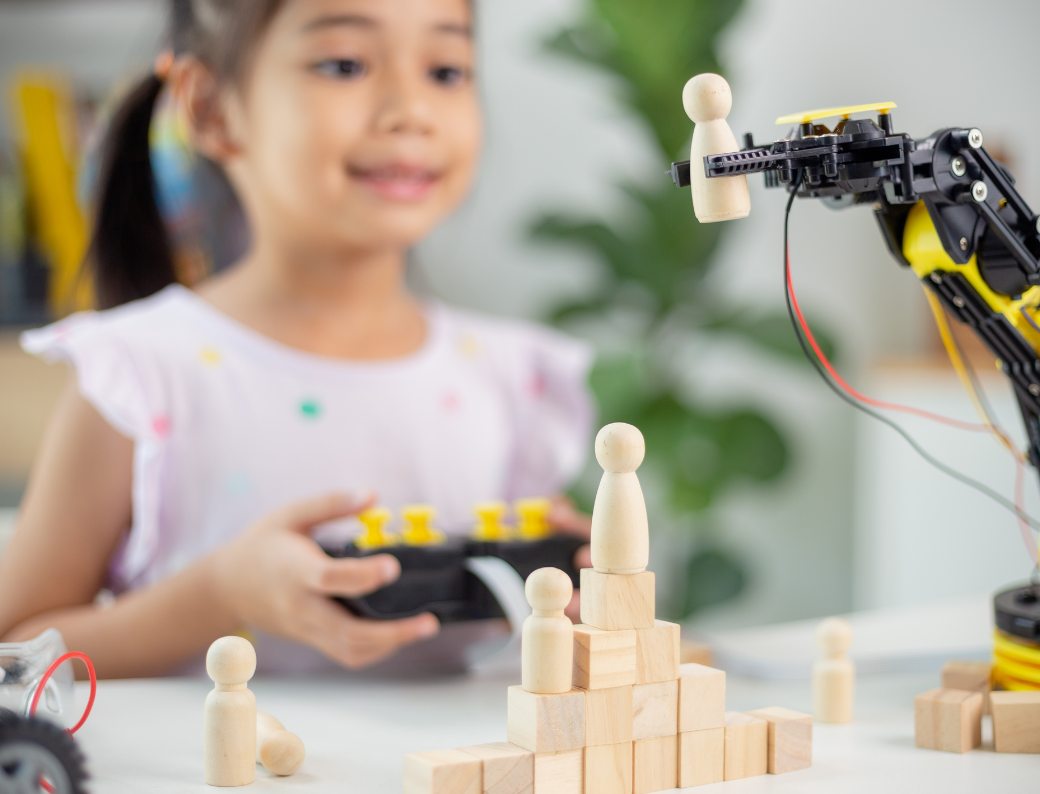
As things move on, some skills have to be learned early if a child is going to keep up with what's ahead. STEM learning is one of the answers to that.
What STEM Is
STEM stands for science, technology, engineering and maths. Those four disciplines matter a great deal, and plenty of professions now require them. That's why STEM matters in the early years, since learning it early carries a considerable return.
The National Science Foundation has noted in its research that children who study STEM build a strong foundation for later learning. That fits how technology has developed, since it draws directly on those disciplines.
So what does STEM actually build? Here are ten things.

1. Language Ability
When children read about science and the other STEM disciplines, it produces a discussion about what they've read. That trains a child's language towards forming a hypothesis, and both are crucial skills in any scientific investigation.
2. Independent and Collaborative Learning
STEM also develops problem-solving. A child is pushed to express and write down their ideas and observations independently. It pushes them towards collaborative learning at the same time.
3. A Foundation for Academic Success
Learning STEM early lets a child build a foundation for their academic work. That's because the disciplines transfer and apply across other subjects, so STEM isn't only science, technology, engineering and maths, it reaches everything else.
4. It Connects School and Home
Children studying STEM can connect what they learn at school with what they do at home. At school they meet the theory, and at home they can explore it further. STEM supports that connection particularly well.
5. It Reveals What They're Drawn To
Studying STEM, a child is indirectly going through a process of self-discovery about their interests and ability. STEM can be the spark that surfaces an ability nobody had noticed, and a parent matters a great deal in developing it from there.
6. Innovative Thinking
The experiments in STEM also build innovative thinking. Given freedom to experiment, children are trained to produce something new from what they've tried, which is where innovative thinking starts.
7. Curiosity
Experimenting across the STEM disciplines usually starts with a child's curiosity. The more that curiosity is fed, the more their thinking develops. So if your child is naturally curious, STEM is a strong fit.
8. Confidence
Confidence matters a great deal to build early, and STEM is well suited to it. Experiments, trials and presenting a hypothesis are all activities that raise a child's confidence.
9. Learning From Failure
In any learning a child will meet failure, STEM included. That failure becomes a valuable lesson later. STEM opens the door wide to experimentation, so even after failing a child isn't afraid to try again.
10. Preparing for a Career
Finally, STEM is an early step towards a career. Work connected to STEM is in reasonably high demand, which opens up options for a child later. Knowing what STEM offers, the next job is making it something a child enjoys.
Here are four ways to support STEM learning at home. None of them needs equipment you would have to buy.
Four Ways to Support It at Home
- Ask Questions Often
There's no reason not to prompt a child with questions while they're learning. Asking why the water changed colour, or why the toy fell, is what wakes up their curiosity. That curiosity is the foundation STEM is built on.
- Set a Schedule and a Theme
At home you can set a schedule and a theme, making Monday a science day and Tuesday a maths day. On each day the activities and games relate to that discipline. A schedule and a theme get a child used to STEM steadily.
- Plan Experiments
Plan STEM experiments to do together. Examples that work at home include building a pyramid from plastic cups, making a cardboard projector, making magnetic slime, and running a walking water experiment.
More here: 10 STEM Activities to Try at Home
- Join a STEM Class
Finally, a STEM class near home is worth considering. In a class a child gets something more structured from a teacher than they would working alone. Finding one is straightforward through the Happy Kamper app, which lists classes you can match to your child's interests.
Where to Find a STEM Class
Happy Kamper lists educational activities alongside play, STEM included. Here are some worth looking at, though it's worth confirming current programmes and fees with each provider directly.
1. STEM and Play Indonesia
As the name suggests, this one has offered a range of STEM activities for children. Lego robotics has been among its more popular classes, alongside pop-up classes and events such as holiday camps. More detail on their Instagram, @stemandplay.id.
2. RoboThink Indonesia
More than robot assembly, RoboThink Indonesia has put a particular emphasis on early years STEM education. Its robotics and coding sessions work well for stimulating a child's STEM ability. More detail on their Instagram, @robothinkid.
3. Kalananti
This coding and robotics course for children suits anyone who enjoys building and making something, which is a central pillar of STEM. One of the outputs has been a working game, and the provider has said children as young as five have built their own. More detail on their Instagram, @kalananti.
4. CK Education
Here children can take a brick and robotics class. Its approach to fun learning is what keeps children engaged, and it's bookable through the Happy Kamper app. More detail on their Instagram, @creativekids_education.
5. Kodekiddo
For AI and coding together, Kodekiddo has run classes covering both. Both are skills a child will need, and the classes have been open to children from roughly 4 to 15. More detail on their Instagram, @kodekiddo.
6. Koding Next Indonesia
Koding Next Indonesia runs coding classes for children, and describes its programme as open to children from 4 to 16. Its current classes, locations and age ranges are listed on its Happy Kamper provider page.
Whichever you choose, proper support is what makes a child enjoy STEM. It's worth comparing a few before committing.