
7 Benefits of Futsal for Children, Plus Where to Train
Futsal keeps a child moving on a smaller pitch, and it builds discipline and teamwork with it. The positions explained, seven benefits, and where to train.
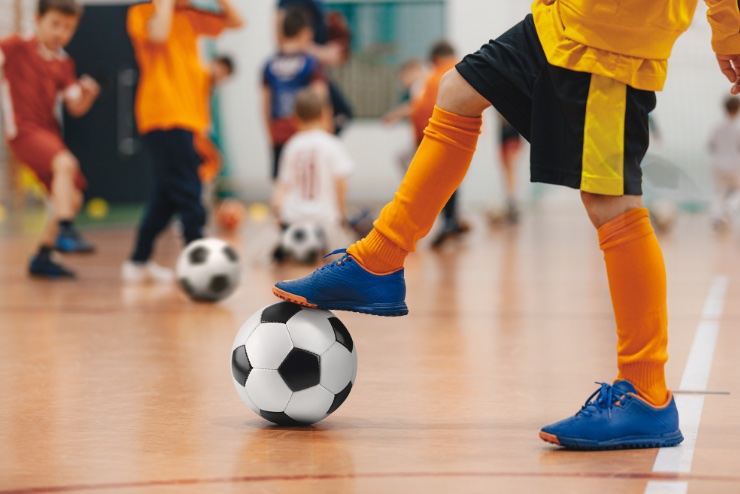
Futsal is enjoyable and popular with children, who get to move constantly while playing on a pitch smaller than a football field. It appeals to boys and girls alike, and the benefits are worth knowing about.
A child can start practising the basics at home before joining anything, passing, shooting and control among them. That way they arrive with a foundation the coaching can build on.
It's worth knowing something about the game yourself too, so you can follow what's happening and encourage them properly. The positions are the obvious place to start.
The Four Futsal Positions
- Goalkeeper
As in football, the goalkeeper's main job is protecting the goal. In certain situations, power play among them, a futsal goalkeeper is expected to play the ball with their feet and even to score.
The role is considerably more active than in football. A child who wants to keep goal needs to work on arm and leg strength equally.
- Anchor
The anchor is the defensive position, though the job isn't only defending, it's organising the attack. Composure and pace are the essential skills. An anchor has to be able to start an attack, hold the ball well, and defend when a counter-attack comes back at them.
- Pivot
Where football has a striker, futsal has the pivot. This one can decide a match, and the main job is scoring as often as possible.
Despite being the attacker, a pivot is also expected to be the first player to slow an opposition attack. The skills needed are shooting accuracy, flexibility, good body balance and a reliable finish.
- Flank
The flank supports the attack and links the anchor to the pivot. There are usually two, one on each side.
What a flank needs is pace, the ability to create a chance, and the ability to finish one. With the positions covered, the next question is what a child gets out of playing.
7 Benefits of Futsal Coaching
1. It's Genuinely Healthy
The first benefit is health. Children need at least 60 minutes of physical activity a day, and futsal covers it comfortably.
It's also enjoyable rather than a chore, because a child is involved and moving throughout. A coach with an entertaining training method makes the difference to whether they keep coming back.
2. Discipline
Futsal coaching builds discipline. Training demands it, from learning the basic technique through to applying it in a game. Sessions also run at a fixed time, which teaches a child to organise themselves around a commitment.
3. Teamwork
As with any team sport, futsal builds cooperation. A child learns to work for the team's result rather than their own. Once that's in place their ego gets easier to manage, and that tends to show up in ordinary life too.
4. It Helps With Weight
Obesity in children keeps rising, and alongside sugar and poor diet, too little physical activity is a large part of it. Futsal coaching covers the activity side. Programmes often cover nutrition as well, so a child has the stamina to train, which keeps their diet in better order too.
5. A Competitive Streak
Futsal teaches a child to work hard for a good result. The competitive instinct gets practised in training as much as in matches, since each child wants to show enough to be picked for the starting side.
That instinct is well worth building through sport. It usually carries into their academic work as well.
6. Mental Resilience
Futsal builds a child's resilience. They learn what a winning mentality actually is, which is not only handling a win but handling a loss. For a child still growing, learning to accept defeat and rejection is among the more valuable things they'll pick up.
7. It Relieves Stress
Lastly, futsal deals with boredom and stress. Adults aren't the only ones who feel it, and children get stressed doing the same thing for too long, particularly something they don't enjoy.
Futsal has them playing and exercising at once, which lightens the mood. Training alongside children their own age adds to it.
So those are the seven. The next step is finding somewhere to train.
Futsal Academies Worth Looking At
Here are a few worth considering. Check current ages, classes and availability with each directly, since these change.
- Babes n Tots
A futsal school specifically for younger children, which has run classes for ages 4 to 5 and 5 to 7, so children are grouped by age. More on Instagram at @babesntotsjkt.
- ANFA Futsal Academy
ANFA Futsal Academy has taken children from age 4 upwards, through to adults. It has also run classes for children with additional needs. More on Instagram at @anfafutsalacademy.
- Halo Kids Indonesia
For futsal coaching in Bandung with a home-visit option, Halo Kids Indonesia is worth a look. It has offered a range of other motor and sport activities alongside. More on Instagram at @halokidsindonesia.
- Playfield Kids Academy
Lastly, Playfield Kids Academy, a sports centre that has taken children from 6 to 18. It has offered several membership options. More on Instagram at @playfieldkidsacademy.
Hopefully that covers both what futsal does for a child and where to start. Each listing on Happy Kamper carries its price, location and reviews from other parents.