

Milestones & Development
What to expect at each age, and when something is worth a closer look. Speech, motor skills, social development and school readiness, with the milestones Indonesian parents are actually measured against.
All articles in Milestones & Development

Worried About Your Child's Development: Where to Start, and in What Order
Start with the free steps: the development checklist in your Buku KIA, then the kader at the monthly Posyandu, then a KPSP screening by a health worker at the Puskesmas. A paediatrician or development clinic comes after that, because a referral is what they need. Go straight to a health worker if your child has lost an ability.

Toilet Training Before Preschool Starts, and What to Ask the Centre
Readiness is a set of signs, not an age. IDAI puts them somewhere between eighteen months and two and a half years, and a child showing them can learn the routine in the weeks before a start date. If the signs are not there yet, agree a plan with the centre instead of forcing the deadline.

What Baby Spa Does for a Baby's Development
Warm water, gentle movement and massage. What a baby spa session actually does for a baby.

Speech Delay in Children: Signs and What to Do
Around 5 to 8% of preschool children experience speech delay. The signs worth watching, and when to act.

What Actually Affects a Child's Development
Genetics, environment, nutrition and more. Seven factors that shape a child's development, and the signs of a delay.

Nine Skills a Child Will Need in the Future
AI is reshaping what work looks like. Nine skills worth building in a child early, and how to start at home.
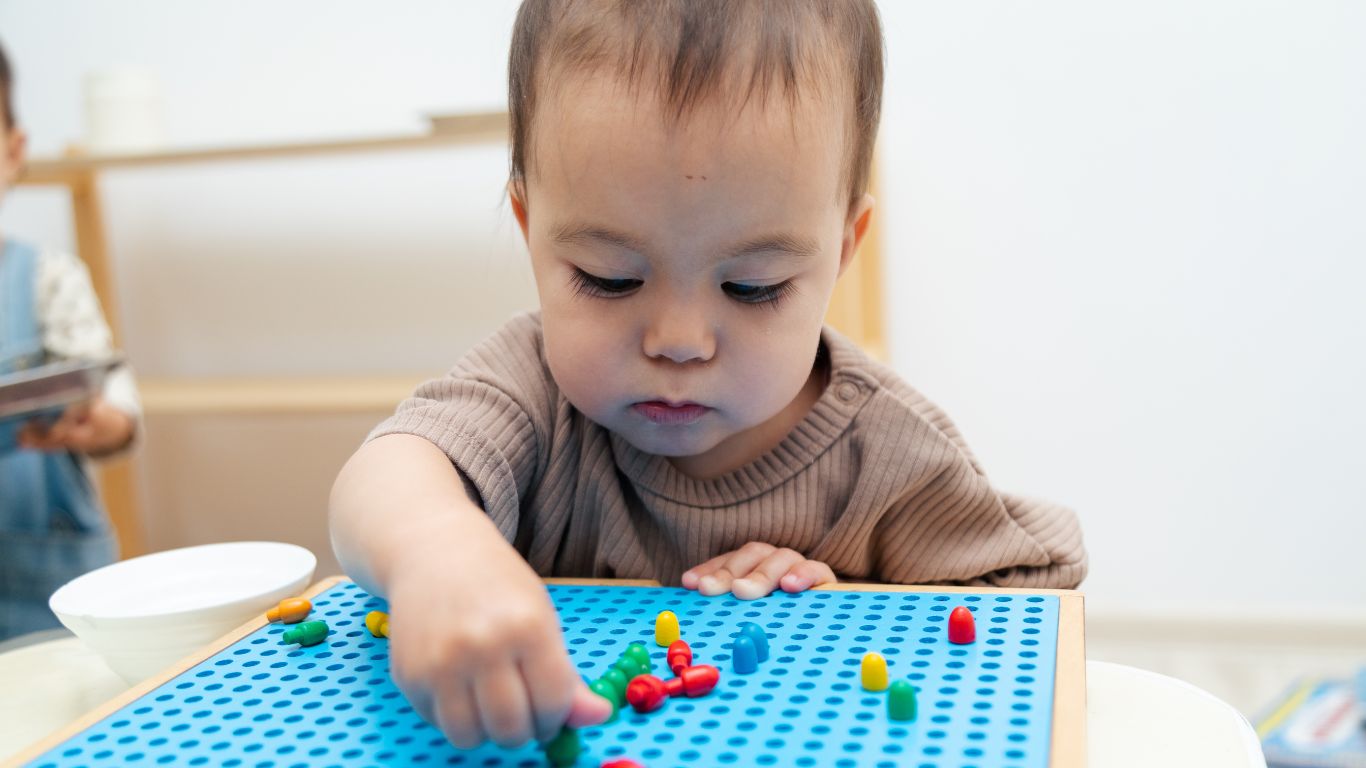
Why Sensory and Motor Classes Matter for a Child
Touching everything is how a child learns. What a sensory class adds to that, and the right age to start.
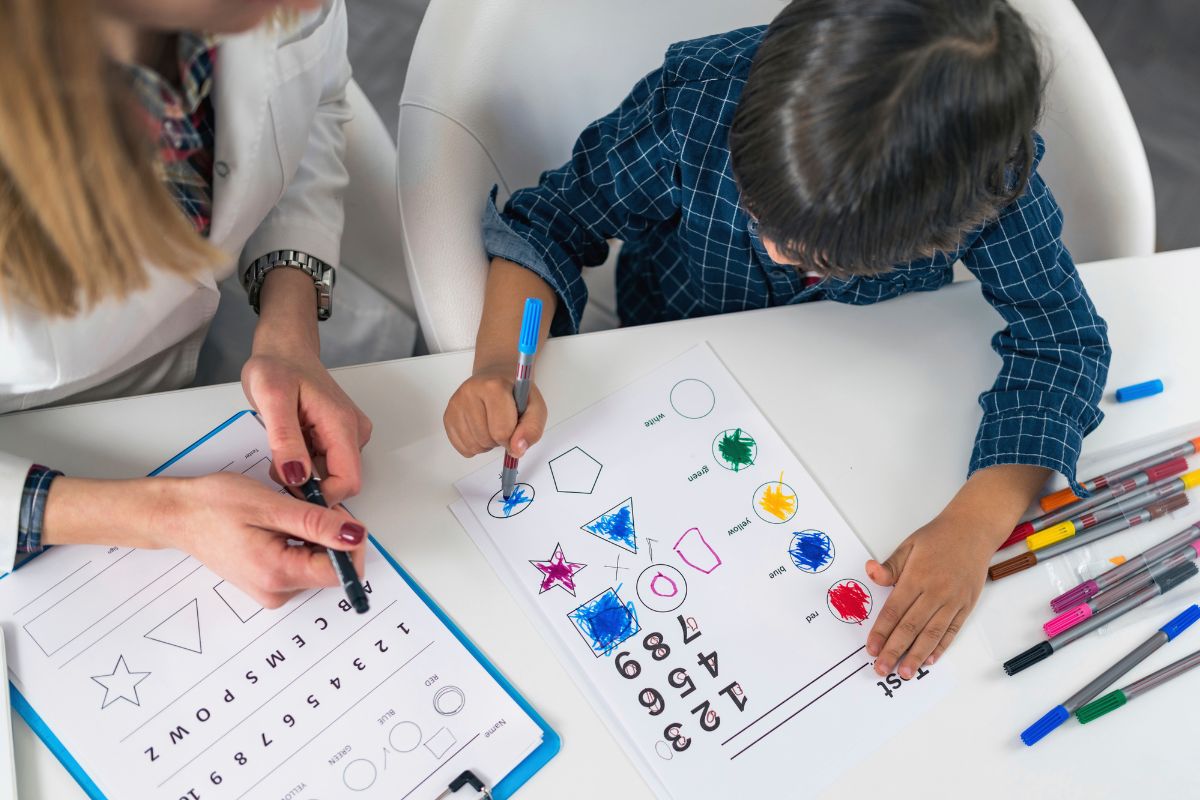
Aptitude and Interest Testing for Children: How Much Does It Matter?
A child who struggles to focus in lessons may come alive in an art class. Testing helps you see why.

How to Build a Child's Reading and Writing Literacy
Literacy is how a child thinks, understands and empathises. Nine practical ways to build it at home.

Kinesthetic Learning: Understanding the Child Who Can't Sit Still
Some children learn through their hands and feet, not by sitting still. How to recognise it, and what to do about it.

When to Start Teaching a Child to Count
Start too early and too formally and a child loses interest. Here's when counting is worth introducing, how to make it enjoyable, and what tends to get in the way.

Speech Delay in Toddlers: Why Catching Up Is Not the Question
Most late talkers do catch up. Longitudinal studies find they reach the average range by age five, six or seven, and still score lower than matched peers into adolescence. So the question is not whether your child will talk. It is whether the delay stands alone or points at something else, and that takes a check.
Child Development Milestones 0–6 Years: Complete Guide for Indonesian Parents
Milestones are age ranges, not pass-or-fail tests. Most babies take first steps and say 1–3 words by 12 months, speak in short sentences by age 3, and read simple words by age 6. Track progress across five domains, motor, language, cognitive, social-emotional, and self-care, and see a paediatrician about significant delays or any loss of skills.

Learning Through Play, Why It Matters for Early Childhood Development in Indonesia
For children under 6, play is the main way learning happens. Open-ended play builds language, motor skills, social ability, and early math and science thinking, which is why Indonesia's PAUD curriculum is built around play-based learning. Parents can support it at home with simple open-ended materials and by stepping back rather than directing.

Understanding Your Toddler's Learning Style, A Guide for Parents
Most toddlers lean toward one of three learning styles: visual (learning by seeing), auditory (learning by listening), or kinaesthetic (learning by moving and doing). Watch how your child plays at home over several weeks to spot their dominant style, then choose classes and activities that match how they naturally take in new information.
Toddler Developmental Milestones: The First 36 Months (Indonesia Edition)
Toddler milestones for ages 12 to 36 months are ranges, not fixed dates. Healthy children reach each skill within a six-month window on either side of the median, so trajectory across language, motor, and social domains matters more than the timing of any single skill.
Child Development Milestones: Best Activities for Every Age
Match activities to your child's age. Ages 0-2 need sensory and motor play. Ages 3-4 thrive in creative group settings. Ages 5-7 are ready to build skills across sports, music, and STEM. Ages 8-12 benefit from specializing in what they love.
About this editorial hub
Happy Kamper is an AI-powered childcare management platform for preschools, childcare centers, and enrichment academies in Indonesia. Our editorial team blends early-childhood educators, childcare operators from across Indonesia, and product designers who have spent years in the childcare tech space. Every article we publish is written by one of these specialists and reviewed by at least one other person before it goes live.
Pricing quoted in city guides is sourced from current published rates and family surveys conducted in each neighborhood. Regulatory and compliance information is cross-referenced against the original source documents, ECDA licensing guidance, JKM/KPM rules, and dated as of each article’s last update. Our editorial independence is simple: we recommend Happy Kamper when it is the best fit, and we recommend alternatives honestly when an alternative is the better match for your situation.
We welcome corrections and additions. The fastest way to reach the editorial team is through the Connect link in the site header, a team member responds within two business days. The “Updated” badge on each card tells you when an article was last reviewed; we update content whenever evidence, pricing, or regulation changes meaningfully.