
Kids Art Classes in Bali: Workshop or Course
Seven studios list children's art classes in Bali, spread across Sanur, east Denpasar, Ubud and Gianyar, with listed prices running from Rp121.000 to Rp400.000 per session. They come in two shapes, a single sitting that sends a finished piece home and a term course with a curriculum behind it. Which one you want decides everything else you check.
A workshop and a course sit on the same shelf
You paid for an art class, and what came home was one finished canvas and a child who cannot tell you what they learned. In Bali that usually means you booked a workshop rather than a course, and the listings rarely label which is which.
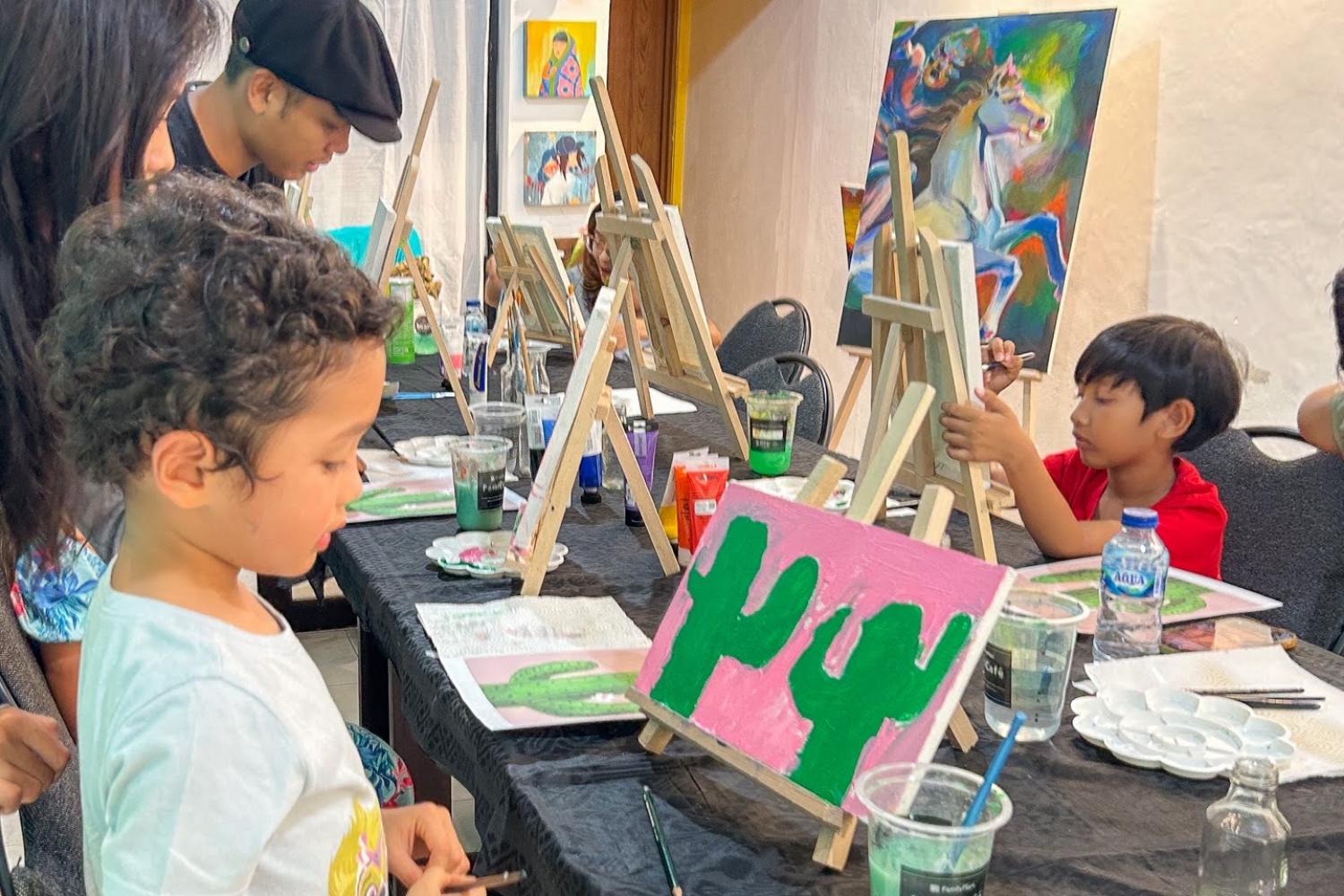
A workshop is one sitting. It is priced per session, the materials are normally handed to you, and the point is the object your child carries out of the door. Nothing is wrong with that, and for a family passing through it is exactly right.
A course is the other shape. One studio in east Denpasar describes a programme that runs a minimum of one month and a maximum of three, built on a set curriculum and ending in an exhibition of the children's work. That studio is selling a sequence, and the finished piece is a by-product rather than the product.
The test is short. Ask how many sittings the fee covers, and whether the second one continues the first or starts something unrelated.
What does the fee actually cover?
Every current Bali art listing is priced by the session rather than by the term. That makes single sessions easy to compare and makes a course easy to misjudge, because a course priced per session costs the number on the page multiplied by however many sittings it actually takes.
Materials are the second question and they are not standardised. One batik listing states that the tools are included in the fee, while others say nothing either way, which is not the same as saying yes. Ask what you are expected to bring, and what happens to a canvas that needs a week to dry.
The third is what the studio does with the work. Some keep pieces back for an end-of-term show, which is worth knowing before your child expects to carry theirs home the same afternoon.
Budgeting a term rather than an afternoon changes the arithmetic completely. The cost calculator works in the same per-session unit these studios list in, which makes the comparison quicker than doing it on paper.
The drive matters more than the brochure
The current listings fall into three areas, and how far apart they sit is the real constraint on a weekly booking. Sanur and east Denpasar hold one group, Ubud holds another, and two more sit further out in Gianyar regency.
A one-off sitting in Ubud is a pleasant morning out from anywhere on the island. A weekly course in Ubud, booked from Sanur, is a drive you will repeat every week for the length of the term. Decide which of the two you are actually buying before the location starts feeling charming rather than practical.
The full set of children's activities listed in the province, art and everything else, sits on the Bali activity listing. It is the quickest way to see whether a studio near you also runs something your child would rather do.
Which language will your child be taught in?
This decides a lot of enrollments here and it is almost never on the studio's page. Of the current art listings, one states English only and one states Bahasa Indonesia only. Most state both, and one states nothing at all.
For a single workshop it matters less than you would expect, because demonstration carries most of a two-hour session. For a term course it matters more than anything else on your list, because the teaching stops being demonstration and becomes feedback on what your child has just done. A child who cannot follow the feedback is attending rather than learning.
Ask which language the teacher corrects in, not which languages the studio can speak. Those are different answers, and only the first one reaches your child.
How do you check a studio before you book?
Start with whether it is registered at all. Kemendikdasmen's reference register lists nonformal course institutions with their NPSN, name and address, and it drills from the province down to the district. Searching the studio's name there tells you whether it is on the register as an LKP.
What the register settles is narrow, and worth being clear about. It records whether an institution is registered as a course provider, and it says nothing about the teaching in the room.
So treat it as a first filter rather than a verdict. Then ask the studio how many children are in a session, whether the same teacher takes the group each week, and how old the youngest and oldest in the room will be. Listed age bands across these studios start as young as zero and run to eighteen, which means a stated band tells you very little on its own.
The practical bits nobody mentions until you arrive
One of the current listings is a batik class, and batik is worked with molten wax on cloth. Hot wax burns, which is the ordinary risk of the technique rather than a sign of a badly run class. Ask who does the pouring, and what the studio does when a child wants to try it.
Painting sessions have a quieter version of the same problem, which is drying time. A canvas finished at the end of a session is not dry at the end of a session, and a studio running back-to-back groups may need to keep it. Ask when you collect it, because the answer decides whether you drive back.
If none of the seven current studios fits the age or the area, the activity finder filters the whole Bali list by age and category. Art is one category among several, and a child who will not sit still for painting may sit still for something else entirely.
1. WILD EXPERIENCES BALI
Available classes include WILD ART. Programs for children aged 0 to 12. Listed from Rp150.000 per session. Rated 4.8 from 95 parent reviews. See the profile and class schedule.
2. Mogi Art Room
Available classes include Morning & Noon - ARTventure, Art Creation Class. Programs for children aged 2 to 13. Listed from Rp175.000 per session. Rated 4.8 from 13 parent reviews. See the profile and class schedule.
3. Art Haus
Available classes include Tropical Florals Painting, Kids Class Painting. Programs for children aged 6 to 16. Listed from Rp250.000 per session. See the profile and class schedule.
4. Bali Earth School
Available classes include Art Painting, How to Draw Digital Manga. Programs for children aged 3 to 18. Listed from Rp250.000 per session. See the profile and class schedule.
5. Deking batik class
Available classes include Batik class. Programs for children aged 6 to 18. Listed from Rp400.000 per session. See the profile and class schedule.
6. Gana Creative Academy
Available classes include Kelas Reguler. Programs for children aged 5 to 12. Listed from Rp285.000 per session. See the profile and class schedule.
7. KANCIL ART BALI
Available classes include PRIVATE ART CLASS. Programs for children aged 3 to 18. Listed from Rp300.000 per session. See the profile and class schedule.